Translate

Sunday, March 15, 2020

When should you eat to manage your weight? Breakfast, not late-night snacks


The balance between weight gain and weight gain loss is predominantly determined by what you eat, how much you eat, and by how much exercise you get. But another important factor is often neglected... it's not just how many calories you eat, but WHEN you eat them that will determine how well you burn those calories.


The balance between weight gain and weight gain loss is predominantly determined by what you eat, how much you eat, and by how much exercise you get. But another important factor is often neglected... Published February 27 in the open-access journal PLOS Biology, research conducted by Kevin Kelly, Owen McGuinness, Carl Johnson and colleagues of Vanderbilt University, USA shows that it's not just how many calories you eat, but WHEN you eat them that will determine how well you burn those calories.

Your daily biological clock and sleep regulate how the food you eat is metabolized; thus the choice of burning fats or carbohydrates changes depending on the time of day or night. Your body's circadian rhythm has programmed your body to burn fat when you sleep, so when you skip breakfast and then snack at night you delay burning the fat.


The researchers monitored the metabolism of mid-aged and older subjects in a whole-room respiratory chamber over two separate 56-hour sessions, using a "random crossover" experimental design. In each session, lunch and dinner were presented at the same times (12:30 and 17:45, respectively), but the timing of the third meal differed between the two halves of the study. Thus in one of the 56-hour bouts, the additional daily meal was presented as breakfast (8:00) whereas in the other session, a nutritionally equivalent meal was presented to the same subjects as a late-evening snack (22:00). The duration of the overnight fast was the same for both sessions.

Whereas the two sessions did not differ in the amount or type of food eaten or in the subjects' activity levels, the daily timing of nutrient availability, coupled with clock/sleep control of metabolism, flipped a switch in the subjects' fat/carbohydrate preference such that the late-evening snack session resulted in less fat burned when compared to the breakfast session. The timing of meals during the day/night cycle therefore affects the extent to which ingested food is used versus stored.

This study has important implications for eating habits, suggesting that a daily fast between the evening meal and breakfast will optimize weight management.


Story Source:

Materials provided by PLOS. Note: Content may be edited for style and length.

Monday, February 24, 2020

HOW TO GET CHILDREN TO EAT VEGETABLES? BOTH PARENTS SET AN EXAMPLE!


A positive example set by both the mother and the father promotes the consumption of vegetables, fruit and berries among 3-5-year-old children, according to a new study from the University of Eastern Finland. The study explored the association of the home food environment and parental influence with the consumption of vegetables among kindergarten-aged children. The findings were published in Food Quality and Preference.


Children eat inadequate amounts of vegetables, fruit and berries across Europe and elsewhere, too. As the health and nutrition benefits of these foods are well-known, increasing their consumption among children is a challenge many countries are struggling with. Dietary habits also track from childhood to adulthood, and the period of early childhood is critical for adapting to a diet rich in greens.

The researchers studied the consumption of vegetables, fruit and berries, and the family's home food environment, through a survey taken by parents. The study looked at 114 kindergarten-aged children and their parents (100) in Finland. Raw and cooked vegetables and fruit and berries were analysed separately.

The researchers found that to a certain degree, the consumption of vegetables is affected by different factors than the consumption of fruit and berries. Maternal example was associated with the consumption of raw and cooked vegetables as well as with the consumption of fruit and berries. Paternal example, on the other hand, was the strongest for cooked vegetables.

"This shows that teaching children to eat their greens is not something mothers should be doing alone. A positive example set by both parents is important, as is their encouragement of the child," Researcher and Nutritionist Kaisa Kähkönen from the University of Eastern Finland says.

The study also showed that dinner is the most important meal at home when it comes to teaching children to eat vegetables. The families participating in the study often ate dinner together, highlighting the role of parental influence on the development of children's dietary choices and preferences.

Dinner constitutes a daily opportunity to serve vegetables in a variety of different forms: as the main course, as a side dish, and as salad.

"Variation can be created by serving raw vegetables, such as the ever-popular cucumber and tomato, accompanied by cooked ones. In fact, many root vegetables, cabbages and squashes are best served cooked," Kähkönen says.

When it comes to eating fruit, evening snacks were the most important meal.

The study shows that many families still eat less vegetables, fruit and berries on average than would be beneficial in view of health promotion. Cooked vegetables and berries were the least eaten food items among the study population.

The Institute of Public Health and Clinical Nutrition at the University of Eastern Finland studies how food education in early childhood can support good nutrition among children and promote the establishment of healthy dietary habits.


The newly published study was carried out in collaboration between researchers from the Universities of Eastern Finland, Jyväskylä and Turku. The study was funded by the Jenny and Antti Wihuri Fund.

Sunday, February 2, 2020

US households Waste Nearly a third of the Food They Acquire


American households waste, on average, almost a third of the food they acquire, according to economists, who say this wasted food has an estimated aggregate value of $240 billion annually. Divided among the nearly 128.6 million U.S. households, this waste could be costing the average household about $1,866 per year.


This inefficiency in the food economy has implications for health, food security, food marketing and climate change, noted Edward Jaenicke, professor of agricultural economics, College of Agricultural Sciences, Penn State.

"Our findings are consistent with previous studies, which have shown that 30% to 40% of the total food supply in the United States goes uneaten -- and that means that resources used to produce the uneaten food, including land, energy, water and labor, are wasted as well," Jaenicke said. "But this study is the first to identify and analyze the level of food waste for individual households, which has been nearly impossible to estimate because comprehensive, current data on uneaten food at the household level do not exist."

The researchers overcame this limitation by borrowing methodology from the fields of production economics -- which models the production function of transforming inputs into outputs -- and nutritional science, by which a person's height, weight, gender and age can be used to calculate metabolic energy requirements to maintain body weight.

In this novel approach, Jaenicke and Yang Yu, doctoral candidate in agricultural, environmental and regional economics, analyzed data primarily from 4,000 households that participated in the U.S. Department of Agriculture's National Household Food Acquisition and Purchase Survey, known as FoodAPS. Food-acquisition data from this survey were treated as the "input."


FoodAPS also collected biological measures of participants, enabling the researchers to apply formulas from nutritional science to determine basal metabolic rates and calculate the energy required for household members to maintain body weight, which is the "output." The difference between the amount of food acquired and the amount needed to maintain body weight represents the production inefficiency in the model, which translates to uneaten, and therefore wasted, food.

"Based on our estimation, the average American household wastes 31.9% of the food it acquires," Jaenicke said. "More than two-thirds of households in our study have food-waste estimates of between 20% and 50%. However, even the least wasteful household wastes 8.7% of the food it acquires."

In addition, demographic data collected as part of the survey were used to analyze the differences in food waste among households with a variety of characteristics.

For example, households with higher income generate more waste, and those with healthier diets that include more perishable fruits and vegetables also waste more food, according to the researchers, who reported their findings in the American Journal of Agricultural Economics.

"It's possible that programs encouraging healthy diets may unintentionally lead to more waste," Jaenicke said. "That may be something to think about from a policy perspective -- how can we fine-tune these programs to reduce potential waste."

Household types associated with less food waste include those with greater food insecurity -- especially those that participate in the federal SNAP food assistance program, previously known as "food stamps" -- as well as those households with a larger number of members.


"People in larger households have more meal-management options," Jaenicke explained. "More people means leftover food is more likely to be eaten."

In addition, some grocery items are sold in sizes that may influence waste, he said.

"A household of two may not eat an entire head of cauliflower, so some could be wasted, whereas a larger household is more likely to eat all of it, perhaps at a single meal."

Among other households with lower levels of waste are those who use a shopping list when visiting the supermarket and those who must travel farther to reach their primary grocery store.

"This suggests that planning and food management are factors that influence the amount of wasted food," Jaenicke said.


Beyond the economic and nutritional implications, reducing food waste could be a factor in minimizing the effects of climate change. Previous studies have shown that throughout its life cycle, discarded food is a major source of greenhouse gas emissions, the researchers pointed out.

"According to the U.N. Food and Agriculture Organization, food waste is responsible for about 3.3 gigatons of greenhouse gas annually, which would be, if regarded as a country, the third-largest emitter of carbon after the U.S. and China," Jaenicke said.

The researchers suggested that this study can help fill the need for comprehensive food-waste estimates at the household level that can be generalized to a wide range of household groups.

"While the precise measurement of food waste is important, it may be equally important to investigate further how household-specific factors influence how much food is wasted," said Jaenicke. "We hope our methodology provides a new lens through which to analyze individual household food waste."


The U.S. Department of Agriculture's National Institute of Food and Agriculture supported this work through its Agriculture and Food Research Initiative.

Saturday, January 18, 2020

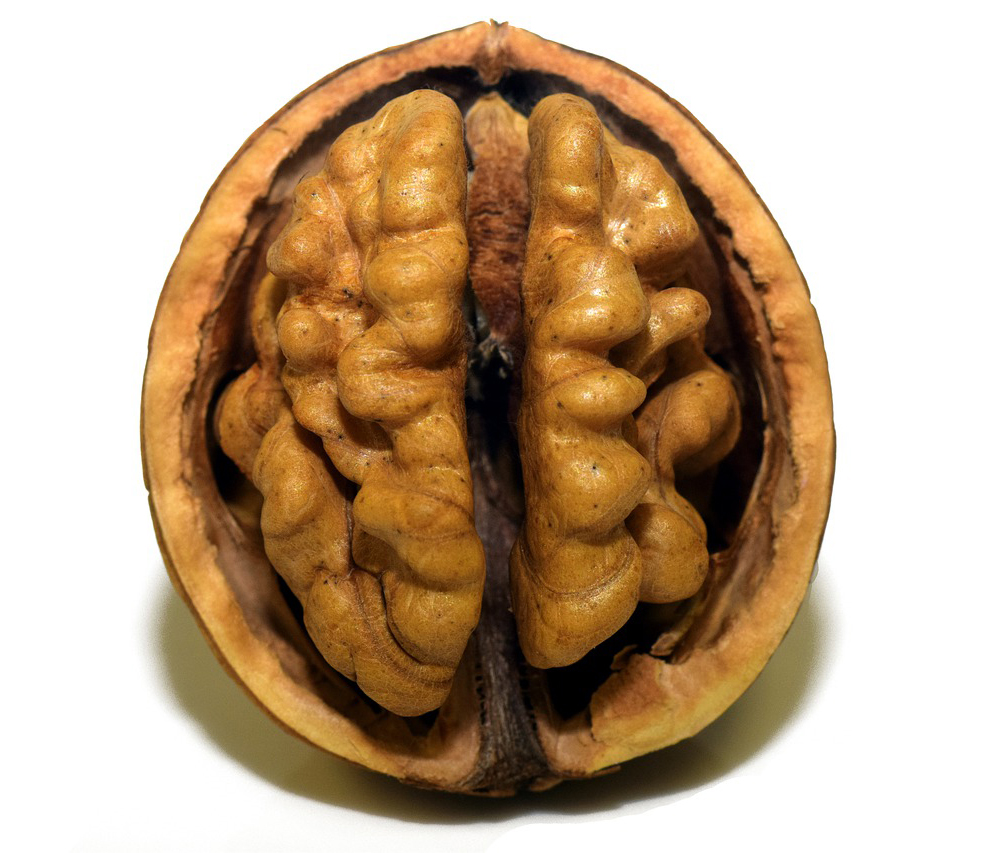
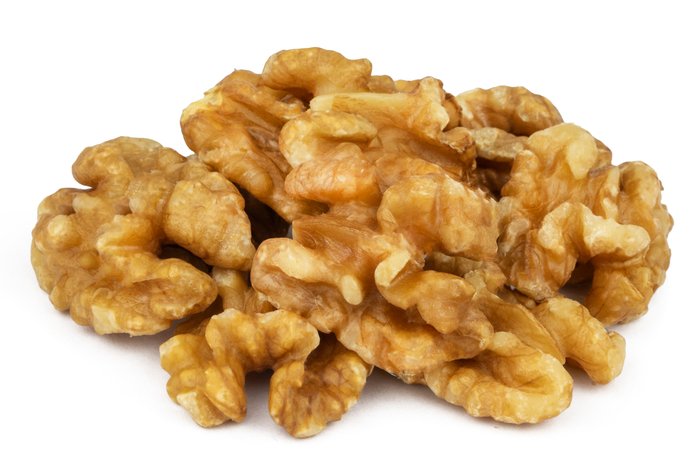
Walnuts may be good for the gut and help promote heart health


Walnuts may not just be a tasty snack, they may also promote good-for-your-gut bacteria. New research suggests that these "good" bacteria could be contributing to the heart-health benefits of walnuts.


In a randomized, controlled trial, researchers found that eating walnuts daily as part of a healthy diet was associated with increases in certain bacteria that can help promote health. Additionally, those changes in gut bacteria were associated with improvements in some risk factors for heart disease.

Kristina Petersen, assistant research professor at Penn State, said the study -- recently published in the Journal of Nutrition -- suggests walnuts may be a heart- and gut-healthy snack.

"Replacing your usual snack -- especially if it's an unhealthy snack -- with walnuts is a small change you can make to improve your diet," Petersen said. "Substantial evidence shows that small improvements in diet greatly benefit health. Eating two to three ounces of walnuts a day as part of a healthy diet could be a good way to improve gut health and reduce the risk of heart disease."

Previous research has shown that walnuts, when combined with a diet low in saturated fats, may have heart-healthy benefits. For example, previous work demonstrated that eating whole walnuts daily lowers cholesterol levels and blood pressure.

According to the researchers, other research has found that changes to the bacteria in the gastrointestinal tract -- also known as the gut microbiome -- may help explain the cardiovascular benefits of walnuts.

"There's a lot of work being done on gut health and how it affects overall health," said Penny Kris-Etherton, distinguished professor of nutrition at Penn State. "So, in addition to looking at factors like lipids and lipoproteins, we wanted to look at gut health. We also wanted to see if changes in gut health with walnut consumption were related to improvements in risk factors for heart disease."

For the study, the researchers recruited 42 participants with overweight or obesity who were between the ages of 30 and 65. Before the study began, participants were placed on an average American diet for two weeks.

After this "run-in" diet, the participants were randomly assigned to one of three study diets, all of which included less saturated fat than the run-in diet. The diets included one that incorporated whole walnuts, one that included the same amount of alpha-linolenic acid (ALA) and polyunsaturated fatty acids without walnuts, and one that partially substituted oleic acid (another fatty acid) for the same amount of ALA found in walnuts, without any walnuts.

In all three diets, walnuts or vegetable oils replaced saturated fat, and all participants followed each diet for six weeks with a break between diet periods.

To analyze the bacteria in the gastrointestinal tract, the researchers collected fecal samples 72 hours before the participants finished the run-in diet and each of the three study diet periods.


"The walnut diet enriched a number of gut bacteria that have been associated with health benefits in the past," Petersen said. "One of those is Roseburia, which has been associated with protection of the gut lining. We also saw enrichment in Eubacteria eligens and Butyricicoccus."

The researchers also found that after the walnut diet, there were significant associations between changes in gut bacteria and risk factors for heart disease. Eubacterium eligens was inversely associated with changes in several different measures of blood pressure, suggesting that greater numbers of Eubacterium eligens was associated with greater reductions in those risk factors.

Additionally, greater numbers of Lachnospiraceae were associated with greater reductions in blood pressure, total cholesterol, and non-HDL cholesterol. There were no significant correlations between enriched bacteria and heart-disease risk factors after the other two diets.

Regina Lamendella, associate professor of biology at Juniata College, said the findings are an example of how people can feed the gut microbiome in a positive way.

"Foods like whole walnuts provide a diverse array of substrates -- like fatty acids, fiber and bioactive compounds -- for our gut microbiomes to feed on," Lamendella said. "In turn, this can help generate beneficial metabolites and other products for our bodies."

Kris-Etherton added that future research can continue to investigate how walnuts affect the microbiome and other elements of health.

"The findings add to what we know about the health benefits of walnuts, this time moving toward their effects on gut health," Kris-Etherton said. "The study gives us clues that nuts may change gut health, and now we're interested in expanding that and looking into how it may affect blood sugar levels."


Thursday, January 9, 2020

Kids twice as likely to eat healthy after watching cooking shows with healthy food


Television programs featuring healthy foods can be a key ingredient in leading children to make healthier food choices now and into adulthood.


A new study in the Journal of Nutrition Education and Behavior, published by Elsevier, found kids who watched a child-oriented cooking show featuring healthy food were 2.7 times more likely to make a healthy food choice than those who watched a different episode of the same show featuring unhealthy food.


Researchers asked 125 10- to 12-year-olds, with parental consent, at five schools in the Netherlands to watch 10 minutes of a Dutch public television cooking program designed for children, and then offered them a snack as a reward for participating. Children who watched the healthy program were far more likely to choose one of the healthy snack options -- an apple or a few pieces of cucumber -- than one of the unhealthy options -- a handful of chips or a handful of salted mini-pretzels.

"The findings from this study indicate cooking programs can be a promising tool for promoting positive changes in children's food-related preferences, attitudes, and behaviors," said lead author Frans Folkvord, PhD, of Tilburg University,Tilburg, Netherlands.

This study was conducted at the children's schools, which could represent a promising alternative for children learning healthy eating behaviors. Prior research has found youth are more likely to eat nutrient-rich foods including fruits and vegetables if they were involved in preparing the dish, but modern reliance on ready-prepared foods and a lack of modeling by parents in preparing fresh foods have led to a drop-in cooking skills among kids.


"Providing nutritional education in school environments instead may have an important positive influence on the knowledge, attitudes, skills, and behaviors of children," Dr. Folkvord said.

This study indicates the visual prominence of healthier options in both food choice and portion size on TV cooking programs leads young viewers to crave those healthier choices then act on those cravings.

The effect that exposure to healthier options has on children is strongly influenced by personality traits. For example, children who don't like new foods are less likely to show a stronger desire for healthier choices after watching a TV program featuring healthier foods than a child who does enjoy trying new foods. As they grow older, though, they start to feel more responsible for their eating habits and can fall back on information they learned as children. Researchers believe this may indicate watching programs with healthier options can still have a positive impact on children's behavior, even if it is delayed by age.

"Schools represent the most effective and efficient way to reach a large section of an important target population, which includes children as well as school staff and the wider community," Dr. Folkvord commented. "Positive peer and teacher modeling can encourage students to try new foods for which they exhibited distaste previously."

Poor dietary habits during childhood and adolescence have multiple negative effects on several health and wellness indicators, including achievement and maintenance of healthy weights, growth and development patterns, and dental health.


"The likelihood of consuming fruits and vegetables among youth and adults is strongly related to knowing how to prepare most fruits and vegetables. Increased cooking skills among children can positively influence their consumption of fruit and vegetables in a manner that will persist into adulthood," Dr. Folkvord added.

Date: January 3, 2020
Source: Elsevier