Translate

Saturday, March 5, 2016

Fuel or food? Study sees increasing competition for land, water resources

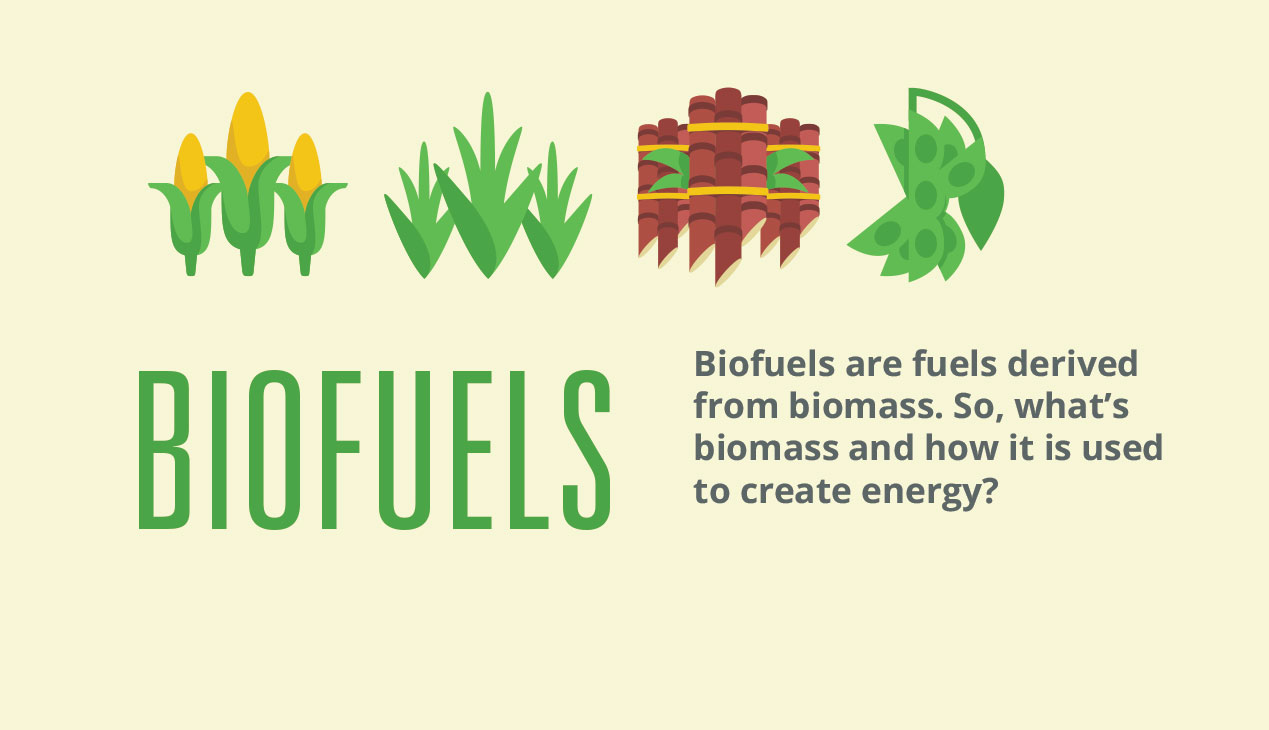
As strategies for energy security, investment opportunities and energy policies prompt ever-growing production and consumption of biofuels like bioethanol and biodiesel, land and water that could otherwise be used for food production increasingly are used to produce crops for fuel.


About 4 percent of the world's agricultural land and 3 to 4 percent of its fresh water are now used for growing biofuels, according to a new study published March 3, 2016 in the Nature journal Scientific Reports. About one-third of the malnourished people in the world, the findings suggest, could be fed by using these resources for food production.

With the world's population at about 7.4 billion people, and projected to grow to about 9 billion by the middle of the century, the need for food and fuel could increasingly be at odds.

"We are investigating and evaluating the affects of biofuels on food security -- the food-energy nexus -- and its link with the global appropriation of land and water," said Paolo D'Odorico, an environmental sciences professor at the University of Virginia who co-wrote the paper with colleagues in Italy. "The land and water resources claimed by biofuel production have been poorly quantified, and we are trying to gain better understanding to help inform public policy."

D'Odorico said that if biofuel production for transportation were to be increased to 10 percent of the total fuel used by the transportation sector -- as is projected to occur based on recent policy and business patterns that encourage renewable energy production -- the planet could meet the food needs of only about 6.7 billion people.

"We are looking at a food deficit for about 700 million people with respect to our current world population," D'Odorico said. "It will only get worse as the population grows."

The research team based its analysis on biofuel consumption rates inferred from data by the United Nation's Food and Agriculture Organization and other sources. They estimated the water and land footprints of one unit of biofuel energy and reconstructed global trade patterns for bioenergy crops. They determined that the approximately 4 percent of agricultural land and water used for producing biofuels would be sufficient to feed about 280 million more people if used for food crops.


"These results clearly show the extent to which biofuels are competing with food for the limited land and water resources of the planet, and are becoming an additional obstacle to bringing food production in line with the increasing needs of the human population," D'Odorico said.


Story Source:

The above post is reprinted from materials provided by University of Virginia. Note: Materials may be edited for content and length.

Wednesday, February 24, 2016

Almond joy: Eating just a handful a day boosts diet health, study shows

Just add a handful of almonds: a University of Florida study suggests that improving one's diet can be as simple as that.


Researchers studied the effect that the addition of almonds can have on a person's diet quality, based on data collected from 28 parent-child pairs living in North Central Florida.

The parents were instructed to eat 1.5 ounces of whole almonds each day during the three-week intervention portion of the research period, and the children were encouraged to eat half an ounce of whole almonds or an equivalent amount of almond butter each day. Although only one parent and one child's habits were analyzed in the study, which was published in the December issue of the Journal of Nutrition Research, the researchers encouraged the whole family to participate and provided enough almonds and almond butter for everyone in the family to eat.

At the beginning of the 14-week research period the research subjects' average Healthy Eating Index scores were 53.7 ± 1.8 for the parents and 53.7 ± 2.6 for the children. The Healthy Eating Index is a measure of diet quality that assesses conformance to the USDA's Dietary Guidelines for Americans. A score below 51 is reflective of a poor diet, a score between 51 and 80 reflects a need for improvement and a score greater than 80 indicates a good diet.


After the almond intervention, the average Healthy Eating Index score for parents and children increased, with parents' average increasing to 61.4 ± 1.4 and children's average increasing to 61.4 ± 2.2. They increased their Healthy Eating Index component scores for total protein foods and decreased the intake of empty calories.

The researchers believe the parents and children were replacing salty and processed snacks with almonds, said Alyssa Burns, a doctoral student in the UF/IFAS food science and human nutrition department who conducted the study.

Over the past 20 years, per-capita consumption of nuts and seeds has decreased in children 3 to 6 years old, while the consumption of savory snacks--like chips and pretzels--increased. Researchers were interested in studying the addition of almonds into 3- to 6-year-old children's diets, because encouraging healthy eating habits during early childhood can have numerous lifelong benefits.

"The habits you have when you are younger are carried into adulthood, so if a parent is able to incorporate almonds or different healthy snacks into a child's diet, it's more likely that the child will choose those snacks later on in life," Burns said.

They were also interested in learning how easy or difficult it is to incorporate almonds into the diets of preschool-aged children--an age when food preferences are developed.

"Some of the challenges that we saw were that the kids were getting bored with the almonds, or they didn't like the taste of the almonds or the almond butter," Burns said.

To counter that, she said they came up with creative ways for the parents to incorporate the almonds into their children's diets--for instance, adding them to familiar foods like oatmeal, smoothies or sandwiches.

The study's results suggest whole food approaches, like adding almonds to one's diet, may be an achievable way to improve overall public health.


"Adding a variety of fruits, vegetables and nuts to your diet can improve your overall diet quality," Burns said.

Tuesday, February 9, 2016

All Supermarkets In France Are Now Required to Give Unsold Food to the Needy


The French government enacted a law on Wednesday making it mandatory for supermarkets in France to donate unwanted food to food banks or charities.
The petition was launched by local councilman Arash Derambarsh and was unanimously passed by the country’s senate, reports the Independent. The effort was reportedly campaigned by anti-poverty groups who were opposed to food waste. These groups are now hoping the rest of the EU follows suit with a similar law.


Fines of up to 75,000 euros ($83,700) or two years in prison will be incurred for those who violate the new law which applies to any supermarket that covers a minimum of 400 square meters of floor area.
It has been a practice of some local supermarkets to pour bleach over the discarded food or to lock them in warehouses to prevent foraging.
You Might Like This From NextShark: What Starbucks Looks Like In 17 Different Countries
Jacques Bailet, head of Banques Alimentaires, a network of French food banks, told the The Guardian that “it would greatly increase an already emerging trend for supermarkets to donate to food banks.”
“In terms of nutritional balance, we currently have a deficit of meat and a lack of fruit and vegetables. This will hopefully allow us to push for those products,” said Bailet.


The legislation is widely seen as simplifying a complicated process of donating directly to charity.
Each year over 7.8 million tons of food are wasted in France while 1.4 billion tons are wasted worldwide.

Written by Editorial Staff, NextShark

Saturday, January 23, 2016

Fatty acids from genetically modified oilseed crops could replace fish oil

Researchers studied the effect in mice of consuming feed enriched with oil from glasshouse-grown genetically engineered Camelina sativa, developed at the agricultural science centre Rothamsted Research.

The goal of the research was to discover whether mammals (using mice as a model) can absorb and accumulate EPA from this novel source of omega-3s.

The team examined levels of EPA in various organs in the body such as the liver, as well as its effect on the expression of genes key for regulating the way the body processes fats. The results show that the benefits were similar to those derived from fish oils.

Lead researcher Prof Anne-Marie Minihane, from UEA's Norwich Medical School, said: "The long chain omega-3 polyunsaturated fatty acid EPA is beneficial for cardiovascular and cognitive health, as well as for foetal development in pregnancy.

"The recommended minimum dietary intake can be achieved by eating one to two portions of oily fish per week.

"But for everyone in the world to achieve their minimum dietary intake, you would need around 1.3 million metric tonnes of EPA per year. Fish currently provide around 40 per cent of the required amount -- so there is a large deficit between supply and demand.

"There is a great need to identify alternative and sustainable sources of these beneficial fatty acids.

"We wanted to test whether oil from genetically modified plants could be used as a substitute. This first study indicates that mammals can efficiently accumulate the key health-beneficial omega-3 fatty acid EPA."

The research team studied mice which had been fed with EPA oil from genetically engineered Camelina sativa, commonly known as false flax, but actually a member of the Brassicaceae family. Crops were grown in glasshouses at the primarily publically-funded Rothamsted Research.

The researchers looked to see whether consuming oil from the engineered plants was as beneficial as EPA rich -- fish oil. They did this by testing tissue concentrations of fatty acids in liver, muscle and brain tissue, along with the expression of genes involved in regulating EPA status and its physiological benefits.

Prof Minihane said: "The mice were fed with a control diet similar to a Westernised human diet, along with supplements of EPA from genetically engineered Camelina sativa or fish oil, for ten weeks -- enough time for any beneficial results to be seen.

"We found that the genetically engineered oil is a bioavailable source of EPA, with comparable benefits for the liver to eating oily fish."

Monday, January 11, 2016


27 Most Loved Cheese and Bread Combinations Around The World

Cheese with bread is a classic all over the world.

Here are some of the most interesting and beloved combinations of bread and cheese from different parts of the world as compiled by Food Republic and reported by The Huffington Post.


Grilled Cheese Sandwich in America

From a plain combination of bread and cheese to inclusions of other ingredients, the American grilled cheese sandwich is a filling classic.

Banerov Hatz in Armenia

In this Armenian specialty, cheese mixed with onions is spread upon thin, pizza-like dough.

Rasgulla in Bangladesh

The rasgullah is on the sweet side and is made of Indian cottage cheese called chhena, semolina dough doused in syrup.

Cuñapé in Bolivia

The cuñapé is crispy outside, soft inside and is made of either tapioca or cassava flour.

Pao de Queijo in Brazil

This Brazilian treat is like the Bolivian cunape in texture and is made with Parmesan.

Pan de Bono in Colombia


This Colombian bagel is made up of feta cheese, egg, quesito, cornmeal and starch.

Smorrebrod in Denmark

This is rye bread with butter and meat, pickled or smoked fish and cheese slices.

Toastie in England

The English toastie is bread slices smeared with butter and grilled with cheese.

Croque Monsieur in France

This is nutty cheese, usually Gruyere, sandwiched by slices of bread, doused by bechamel with nutmeg and either baked or broiled.

Khachapuri in Georgia

Butter, quick-melt cheese, eggs, feta cheese, flour, olive oil, salt and dry yeast make up the Khachapuri.

Flammkuchen in Germany

The flame cake is actually the German pizza version.

Tiropsomo in Greece

Warm bread and feta cheese make up the Greek tiropsomo.

Langos in Hungary

The basic langos is fried bread covered in shredded cheese and sour cream.

Paneer Paratha in India

Paneer cheese and unleavened bread doused in spices are fried before serving.

Beer and Cheese Soda Bread in Ireland

This Irish favourite combines sharp cheese and beer in a bread.

Panino in Italy

The panino bread and cheese slices are grilled to make this Italian offering.

Mochi Bread With Cheese in Japan

In Japan sticky, rice flour mochi is filled with cheese.

Kepta Duona in Lithuania

Bread is cut into strips, fried and topped with cheese and mayonnaise.

Molletes in Mexico

This combines manchego cheese in a scooped baguette or hard roll with butter, ham and beans

Chipa in Paraguay


The chipa is a small cheese and bread ring usually sold in the streets or served at Easter.

Cheese Ensaymada in the Philippines

This Philippine treat is made of spongy bread topped by butter and shredded cheese.

Syrove Tycinky in Slovakia

This bread stick is combined with cream cheese and grated cheese.

Braaibroodjie in South Africa

Cheddar cheese, onion, tomato, fruit chutney are sandwiched in bread slices and grilled.

Bocadillo in Spain

This is crusty Spanish bread filled usually with goat cheese.

Cheese Fondue in Switzerland

This is speared bread chunks dipped in hot melted Gruyere and Emmental cheese with cornstarch and white wine in a fondue pot.

Welsh Rarebit in Wales

The Welsh Rabbit is mostly cheese sauce with spices and mustard smeared on bread.

Khaliat Nahal in Yemen

This is honeycomb bread filled with soft cheese and doused in sweet syrup.